

Chasing Demons
It’s one of the many lessons I learned from my dog Maggie: there are real threats, and those our mind invents. Both can set off powerful reactions in the body and shape future responses to events.

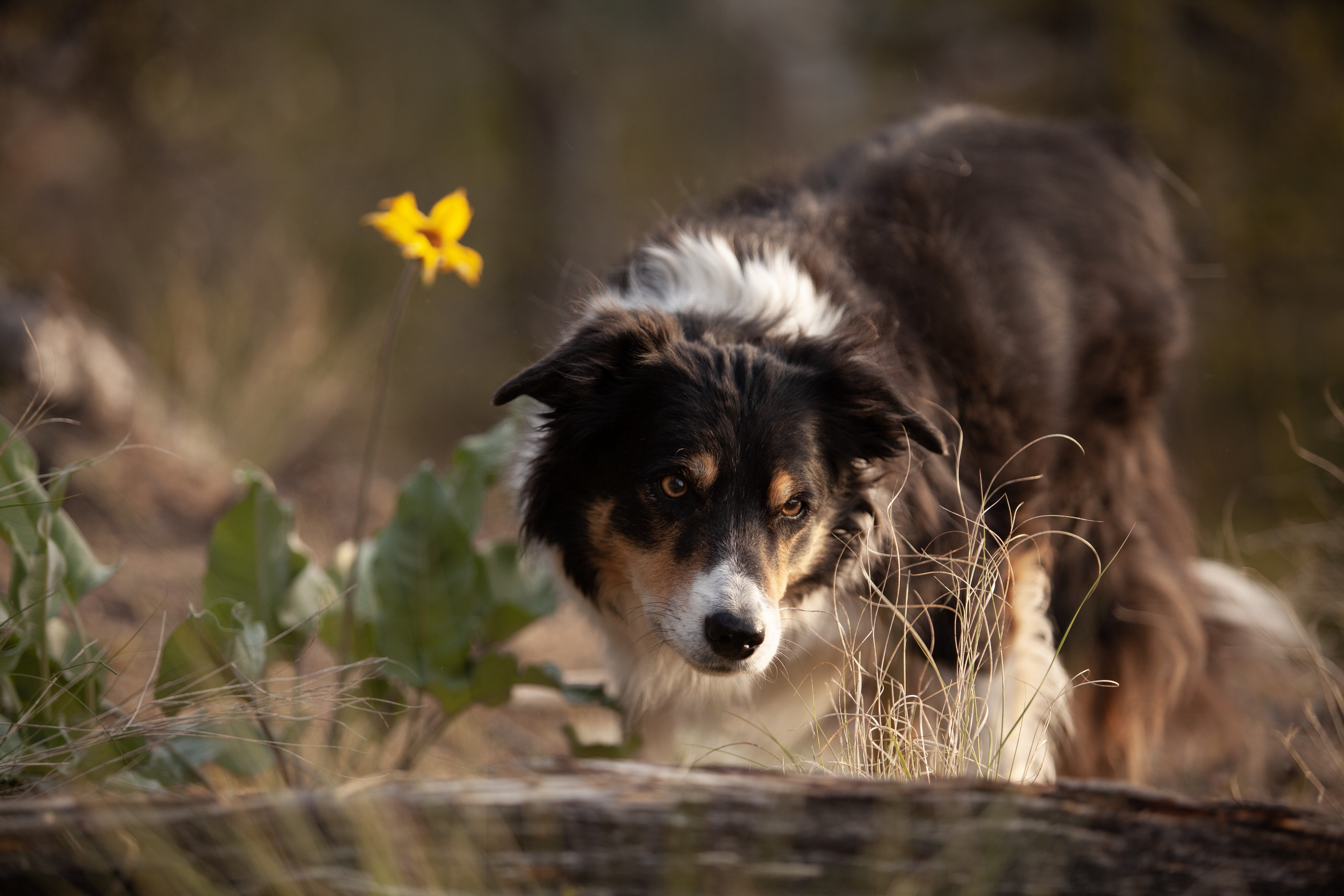
One day, Maggie sensed a turmoil inside me. Unable to locate the source, she searched the outside world for clues and began to overreact to every stranger who came near us.
I couldn’t blame her. If not even I could tell the difference between the rabbit hole some past drama had carved into my soul and an actual threat unfolding around me - how could she?
The ancient yogis had a word for this pattern: Viparyaya - mistaking the false for the true. Dreading what is not real. Our minds spin stories from the past that feel alive in the present.
Ever since I became aware of my inner demons feeding me narratives, I feel better equipped for debunking them. Although awareness doesn’t conquer the phantoms, it shines a light on them. I no longer mistake their shadows for the end of me - as I used to.
A clear October morning in 2002, in the south of Germany near the mountains.
Our old wooden house, renovated on a tight budget. A nuclear family - father, mother, son, daughter, dog, and rabbit - still half asleep, just before seven on a Monday.
From her bed, Maggie watched me make coffee while she listened into all three bedrooms for the moment the other members of her pack would wake up. My thoughts were already on the next task. The young man upstairs would have to be pulled out of bed by his feet again. My daughter's sleepy steps already dropped above our heads. She was light as a feather, still every move made the floor groan.
I loved the sounds of that house: the wind swishing through the tall, protective firs around us, the creak of the old wood in the walls as if it were breathing alongside us. At the top of our steep cul-de-sac there was no traffic to break the silence of an early morning, the soundscape of my freedom.
Who would have thought we’d be doing so well, I often wondered. We really had made it here! It wasn’t the state I had been raised to believe in, but the one I had always longed for: independence. I had grown up with a very successful father who expected everyone to play their part in his grand design.
The messages woven into my very cells were clear: You will always need him. He controls everything. You are fooling yourself if you think you can have your own plan.
But in the end, he was wrong. Luckily so, because a year and a half earlier he had abandoned my entire existence when he left my mother. He had filed for divorce to marry a much younger woman. True to form, he made it a battle. He knew every trick when it came to protecting his wealth. My mom had devoted her entire life, tirelessly, to his career. I had to watch her being cast aside like a worn-out wardrobe.
My father was shrewd in securing his fortune, not only in divorcing his wife of 33 years, but also when it came to fighting the government. He hated paying taxes, and he wasn’t alone.
In Germany at the time, many boomer fortunes had exploded during the years of rapid economic growth. Surrounded by low-tax havens, it was almost considered naive not to move one’s residence across the border. Most celebrities did it.
By the late 90s, the government began cracking down on these “tax fugitives.” The father of the world’s most successful tennis star went to jail for what was admiringly called creative tax returns, and others, many of them from the so-called industrial aristocracy, followed.
What still amazes me today is the sympathy so many felt for the wealthy that refused to pay their fair share. After all, the prosperous boomers had made their money on the work ethic and buying power of the German people. They had taken advantage of economic stimuli from the government.
Still, the Germans curiously consumed their stories with fascination, reinforcing their entitlement. My father of course was no celebrity and in relation to most members of this elite a rather small fish, but he was riding on this wave of unspoken approval.
It is still happening today:
We hand the ultra-rich the lion’s share of media attention. Even when all they generate is bad press, we keep giving them all this space in our minds, and by doing so, we excuse their worst behaviour. And, we also ignore the good progress that’s happening elsewhere, the slow and subtle evolution, because it doesn’t give us these shivers of witnessing something world-shattering.
Back to our old house in the Alpine foothills and the year 2002.
Halfway up the stairs to wake my son, I was suddenly caught in a wave of terror. Things I hadn’t consciously registered had happened around me. On some deeper level I must have sensed them: cars driving up the hill, clogging our driveway. Man-shaped shadows - many of them - gathering in front of the frosted glass of our front door. Maggie, without warning, flew into a rage.
We always see more than we know. We gather fragments in the subconscious while we stay busy with the tasks at hand.
And so it happened that I knew what was coming before the doorbell rang. My life collapsing. Maggie plunged with me into an abyss that was created by my past experience.
It was the tax investigation. I had heard whispers, though I must have pushed them aside, that my father was in trouble. Officially, he had left the country for a tax haven long ago. But there was a certain time a few years back, when, according to the officials, he was really spending most of his time in Germany.
Those men had come to prove his offence. They searched our house and our business, pulled the data from our computers, seized every photo they found along with my personal diaries, and interrogated everyone who had ever lived or worked close to him or us.
My husband and I were diligent taxpayers. We didn’t even get creative in the most common of ways. On some level I knew the shadows at our door couldn’t harm us.
Still, fantasies of downfall danced a death dance along my neuropathways. My breathing, my heart rate, my cocktail of hormones signaled danger and set off Maggie’s alarm. To her, the message was clear: this invasion is deadly. It’s them or us. She had to be locked into the basement so we could surrender to the state power.
In my perception, my father returned into my life to remind me that there was no untangling from him, that we were co-dependant, co-guilty. I had no right to be free or claim peace for my family. My soul was pre-owned and cluttered with the chaos that he caused. When a few weeks later my dad was put behind bars for a couple of months to keep him from crossing borders again, parts of me were locked in with him.
Maggie was never the same after that day.
Even long after that nerve-wrecking season of investigations was behind us, the phantoms kept pushing Maggie over the edge. She growled at every unfamiliar man, and when they appeared in groups, she completely lost control.
This joyjul, peaceful, and utterly loyal dog - the beating heart of our house, the glue that held our family together - had become unpredictable. For the next few years, we had to keep her close on her leash whenever strangers were around.
There was no doubt, Maggie was still just being my mirror, and I had passed on my scars to her.
I had no idea, Karin. Thank you for sharing this. I’m grateful to be here with you in it, holding space as we get curious about what the body knows (and even our beloved pets know), sometimes long before the mind can name it. ❤️
Beautiful writing and an amazing story! WOW!